In the landscape of childhood development, toys play a pivotal role far beyond mere entertainment. They are instrumental in nurturing emotional intelligence (EI) and social skills, foundational aspects that influence a child’s ability to understand, use, and manage emotions in themselves and others.
Among the myriad of toys that contribute to this developmental area, two seemingly diverse options stand out: trampolines, specifically 10ft and 12ft trampolines with enclosures, and mud kitchens. Each, in its own unique way, supports the growth of EI and social competencies in children.
Trampolines: A Leap For Social And Emotional Growth
The inclusion of a trampoline, be it a 10ft trampoline with enclosure or a larger 12ft trampoline, in a child’s play regime, offers more than just physical benefits. These bouncing platforms provide a safe and enclosed environment where children can freely express themselves, experiencing joy, excitement, and sometimes frustration. The process of waiting for one’s turn, observing safety rules, and engaging in cooperative play are all integral to developing patience, empathy, and understanding of social cues.
The exhilaration of bouncing on a trampoline allows children to release pent-up energy, reducing stress and anxiety, which is crucial for emotional regulation. Furthermore, the shared experiences on these trampolines foster a sense of community and belonging, essential for building social connections and emotional bonds.
Mud Kitchens: Stirring Emotional And Social Development
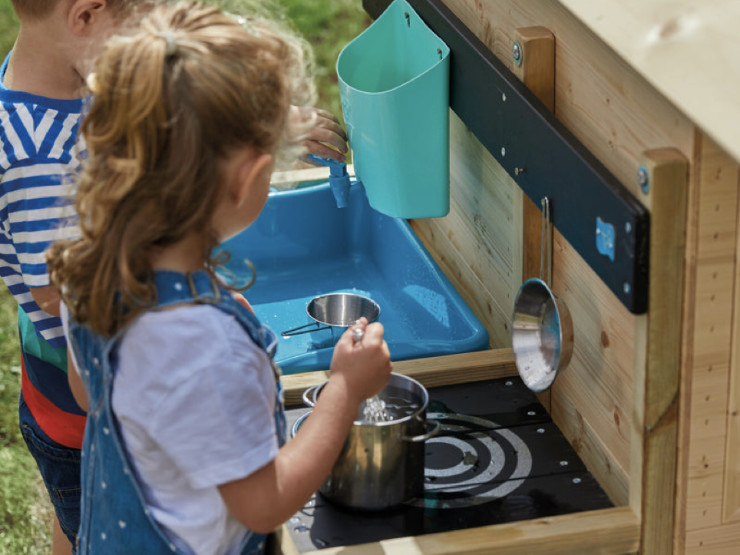
Mud kitchens offer a stark contrast to the high-energy activity of trampolines, yet they are equally influential in enhancing EI and social skills. These imaginative play settings invite children into a world of pretend play, where they can mimic and understand various roles and perspectives. The act of creating mud pies, sharing utensils, and negotiating roles in this mini culinary world teaches valuable lessons in cooperation, sharing, and empathy.
Moreover, mud kitchens are excellent for sensory play, allowing children to explore and understand different textures and sensations. This exploration is vital for emotional development, as it helps children process and express their feelings through a tangible medium, enhancing their emotional vocabulary and understanding
Integrating Trampolines And Mud Kitchens Into Play
Incorporating both trampolines and mud kitchens into a child’s play environment offers a balanced approach to developing EI and social skills. The key is to encourage activities that promote interaction, cooperation, and emotional expression in safe and supervised settings.
- Safety First: When introducing a trampoline, whether a 10ft trampoline with enclosure for smaller spaces or a spacious 12ft trampoline for larger areas, ensure it is equipped with safety features and rules are clearly communicated and adhered to. This sets a foundation for understanding boundaries and respecting guidelines, which are crucial social skills.
- Structured and Free Play: Alternate between structured games that require turn-taking and cooperation on the trampoline and free play in the mud kitchen, where children can explore their creativity and negotiate roles freely. This variety supports a broad spectrum of emotional and social learning opportunities.
- Emotional Expression Through Play: Encourage children to talk about their experiences and feelings during and after play. Discussing the thrill of bouncing high or the satisfaction of creating a mud masterpiece helps children articulate their emotions, building their EI.
- Inclusive Play: Ensure that play activities are inclusive, allowing children of different ages and abilities to participate. This inclusivity fosters empathy and understanding as children learn to accommodate and appreciate each other’s differences.

Conclusion
Toys and play environments like trampolines and mud kitchens are more than just sources of amusement. They are essential tools in the development of a child’s emotional intelligence and social skills. By carefully selecting toys that offer opportunities for emotional expression, cooperative play, and creative exploration, parents and educators can significantly contribute to a child’s holistic development. Engaging in these play activities not only prepares children for the emotional and social challenges of the future but also ensures they have a lot of fun along the way.