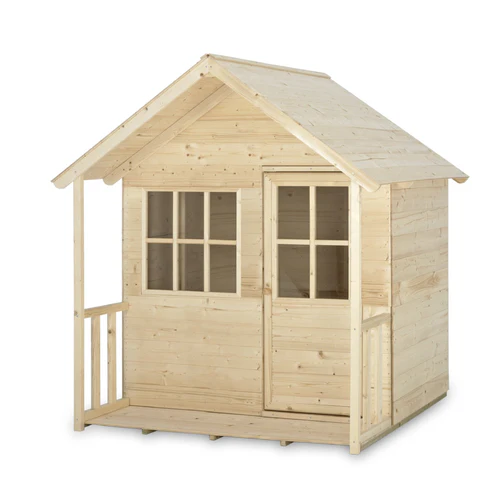
Play is often seen as a simple way for children to pass the time, but in reality, it is one of the most essential aspects of a child’s development. Through play, children not only have fun but also learn key life skills, foster emotional connections, and enhance their cognitive abilities. The importance of play cannot be overstated, as it plays a crucial role in shaping a child’s emotional, social, and intellectual growth. In this article, we will explore how various types of play, including indoor games, playhouses (Maisonnette), and outdoor play areas (Aire de jeux), contribute to a child’s development.
Play as a Learning Tool
Children are naturally curious, and play provides them with the perfect environment to explore, experiment, and learn. Whether it’s through imaginative play in a Maisonnette, building structures in an Aire de jeux, or solving puzzles, every play activity serves as a valuable learning experience.
In cognitive development, play enhances problem-solving skills, critical thinking, and creativity. For example, when children engage in building blocks or puzzles, they learn to recognise shapes, patterns, and colours, and develop their ability to think logically and spatially. These activities are not just fun; they also help children develop early maths and science skills that will serve them well as they continue their education.
Moreover, play encourages children to take risks in a safe environment. When they build a fort in their Maisonnette or climb on a structure at the Aire de jeux, they are learning about cause and effect, testing their limits, and building confidence in their abilities. These experiences are crucial for developing resilience and a sense of independence.
Emotional Growth Through Play
Emotional development is another key aspect of child growth that is nurtured through play. For young children, play provides an outlet for expressing feelings that they might not yet have the language to articulate. Through imaginative play, children can explore different emotions and scenarios, helping them understand and process their own feelings. This is particularly true in a Maisonnette, where children often engage in role-playing activities, pretending to be parents, doctors, or teachers, which allows them to experiment with different emotional responses in a safe space.
Furthermore, engaging in Jeux d’intérieur or outdoor play with other children provides opportunities for socialisation, helping children develop important social skills such as sharing, taking turns, and negotiating. When children play together, they learn to navigate conflicts and express their emotions in healthy ways, fostering emotional intelligence. The shared joy of playing with friends also promotes feelings of happiness and self-worth, which are crucial for mental well-being.
For children who may struggle with emotional regulation, play can be a therapeutic tool. For instance, sensory play or quiet play in a Maisonnette can provide a calming effect, allowing children to relax and process their emotions. Similarly, outdoor play in an Aire de jeux can be an outlet for children to release pent-up energy, helping to reduce stress and anxiety.
Social Skills and Play
The social benefits of play are profound. Through group activities, whether inside with Jeux d’intérieur or outside in an Aire de jeux, children develop critical social skills such as cooperation, empathy, and communication. When playing in a Maisonnette or in any group setting, children are encouraged to collaborate, share resources, and take turns. These skills are essential not only for making friends but also for succeeding in school and later life.
Play provides a unique space for children to learn about social roles and norms. In the Maisonnette, for example, children may take on different roles, such as the parent or the child, and practice social interactions in a controlled environment. This helps children understand and navigate societal expectations, learning how to behave in different situations and with various people.
Group play also teaches conflict resolution skills. In a playground or during Jeux d’intérieur, it is inevitable that children will face disagreements. However, it is through these moments that children learn to negotiate, apologise, and find solutions to problems. These skills are transferable to all areas of life, making play an important tool for long-term social development.
Physical Development Through Play
While cognitive and emotional development are crucial, physical development is equally important. Play, particularly outdoor activities in an Aire de jeux, encourages children to develop both fine and gross motor skills. Climbing, running, and jumping all contribute to the strengthening of muscles and coordination. These physical activities are essential for building a healthy body, improving balance, and developing motor control.
For younger children, indoor play such as Jeux d’intérieur can also be used to develop hand-eye coordination and fine motor skills. Activities like drawing, building with blocks, or playing with small toys require precision and dexterity, which are essential for tasks such as writing and using tools later in life.
Additionally, play helps children develop an awareness of their body and how it moves in space. This can lead to better posture, strength, and overall physical health. The benefits of regular physical activity during play are long-lasting, contributing to better physical fitness, reduced risk of childhood obesity, and an overall healthier lifestyle.
Play and Cognitive Development
Cognitive development in children involves acquiring knowledge, understanding, and problem-solving skills. Play, particularly through structured activities in an Aire de jeux or Maisonnette, is one of the most effective ways to promote cognitive growth. Outdoor play stimulates curiosity and fosters a connection to the world around them. Climbing a tree, exploring nature, or building a sandcastle at a playground helps children to learn about their environment and the physical world.
Similarly, Jeux d’intérieur, such as puzzles, board games, and memory games, encourage children to think strategically, develop patience, and enhance their attention span. These activities also teach children to follow instructions and understand the concept of rules, which is important for both academic learning and social interaction.
Through cognitive development, children gain the skills necessary for academic success, such as reading, writing, and mathematical abilities. Play acts as the foundation for these skills, ensuring that children are not only prepared for school but also have a strong grasp of the world around them.
The Role of Parents in Encouraging Play
While play is essential for a child’s development, it is important to note that the role of parents and caregivers cannot be overlooked. Encouraging children to engage in a variety of play activities, both indoors and outdoors, helps to stimulate their imagination and learning. Providing access to resources such as a Maisonnette, outdoor play equipment in an Aire de jeux, or fun games like Jeux d’intérieur can significantly enhance a child’s developmental experience.
Moreover, parents who actively participate in play with their children not only provide emotional support but also strengthen their bond. Playing together can create lasting memories and provide opportunities for communication, helping children feel loved and supported.

Conclusion
The importance of play in child development is undeniable. Through play, children are not just having fun—they are learning, growing, and developing essential skills that will serve them throughout their lives. Whether it’s the imaginative play in a Maisonnette, the physical activities in an Aire de jeux, or the problem-solving involved in Jeux d’intérieur, each form of play contributes to a child’s emotional, social, and cognitive growth. As parents and caregivers, it is essential to recognise the significance of play and provide children with opportunities to engage in it. Play is not just a pastime but a fundamental building block of a child’s development and well-being.